

The Matilda effect
By Mathéo Girardin Tarby
Published the 22/10/2025 à 13h00
A historical bias that erases women from scientific progress
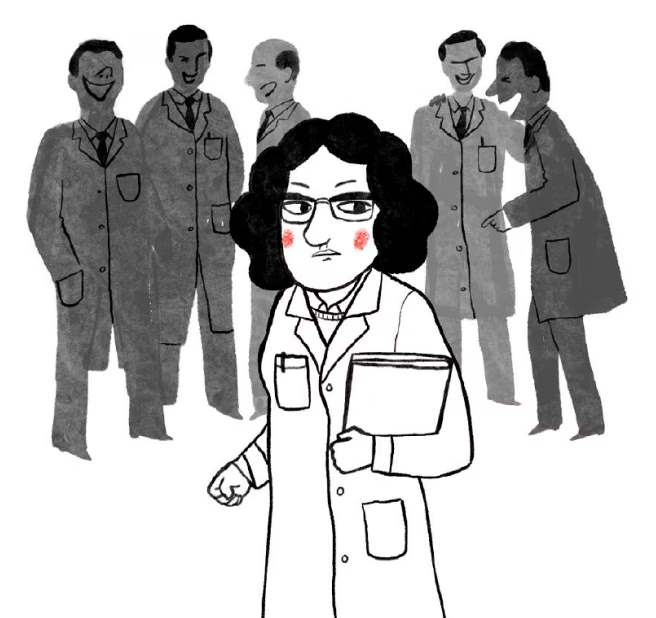
In the corridors of scientific memory, some names resonate strongly. Others, yet equally deserving, fade away. Behind this injustice hides an insidious phenomenon: the 'Matilda effect'. It refers to the tendency to minimize, even deny, the contributions of women scientists, often for the benefit of their male colleagues. A silent mechanism that has shaped history... forgetting its pioneers.
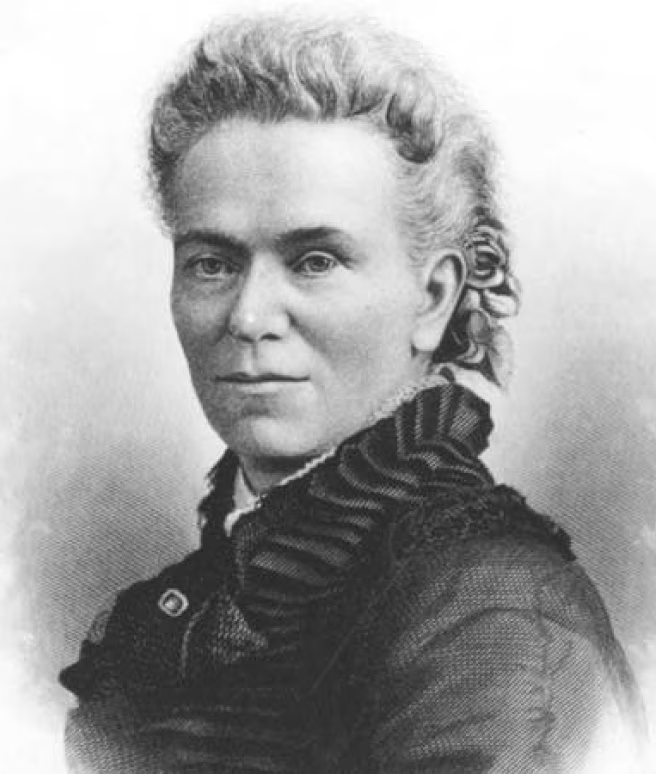
Picture of Matilda Joslyn Gage
Understanding the mechanism of forgetting
The term 'Matilda effect' was coined in 1993 by historian Margaret W. Rossiter. It pays tribute to Matilda Joslyn Gage, a feminist activist of the 19th century, who was already denouncing the appropriation of women’s ideas. This gender bias, deeply rooted in academic institutions, consists of attributing women’s discoveries to men, or relegating them to the background.
Picture of Lise Meitner
Examples that make you think
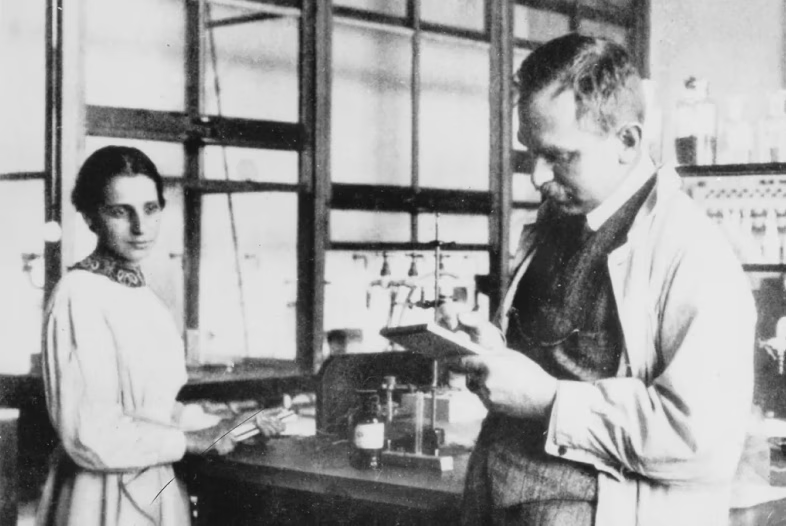
The history of science is full of emblematic cases. Lise Meitner, for example, played a central role in the discovery of nuclear fission, but it was Otto Hahn alone who was awarded the Nobel Prize. Rosalind Franklin, whose diffraction images helped reveal the structure of DNA, has long remained in the shadow of Watson and Crick. Jocelyn Bell Burnell, co-discoverer of pulsars, saw her supervisor receive the honors in her place.
"The Matilda effect is not only an individual injustice, it is a collective loss for science."Margaret W. Rossiter
Repair history, inspire the future
The consequences are profound. By making women invisible, we deprive young generations of inspiring models. This lack of recognition perpetuates female underrepresentation in science. Recognizing these injustices also means rewriting a fairer history and encouraging more inclusive science.